What Actually Breaks First on a Texas Air Conditioner
Most Texas air conditioners break down in a predictable order, and knowing it can save you from a summer breakdown.
August 25, 2026 · 4 min read
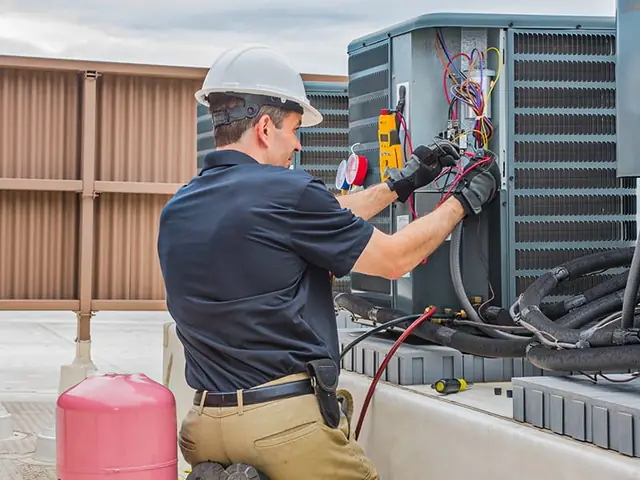
An air conditioner in The Woodlands, Conroe, and the surrounding Montgomery County towns works harder than almost anywhere else in the country. Long, humid summers push a system through months of nearly constant runtime, and that kind of load does not wear every part down at the same rate. Some components fail early and often, long before the compressor or the coils ever show a problem. Others hold on quietly for years and then go all at once, usually on the hottest day of the year. Knowing the rough order things tend to break helps you catch a small, cheap problem in the spring instead of discovering an expensive one during a hundred-degree afternoon in July or August.
The filter and the thermostat go first
A dirty or clogged filter is usually the first thing to cause trouble, and it is also the easiest and cheapest thing to fix. When a filter is packed with dust, pollen, and pet hair, air flow through the system drops off, and a unit that cannot pull enough air across its coil will eventually freeze solid. A frozen coil looks dramatic, ice on the refrigerant lines, weak or no air at the vents, warm air blowing when the system should be cooling, but it almost always traces back to something as simple as a filter nobody swapped out in months. The thermostat tends to fail for different reasons: loose wiring, age, or dust building up inside the unit itself. When a thermostat starts giving false readings, the whole system runs on bad information. It cycles too often, not often enough, or simply stops matching what the display says it is doing.
Refrigerant and drainage problems show up next
Once airflow and the thermostat are ruled out, refrigerant and drainage issues are usually next in line. A refrigerant leak causes noticeable temperature fluctuations. The system still runs, the fan still blows, but the air coming out is not as cold as it should be, and it tends to get worse over days or weeks rather than fail all at once. Drainage is a quieter problem until it suddenly isn't. Clogged drain lines let condensation back up instead of draining outside the way it is supposed to, and that water has to go somewhere. Most often it shows up as a stain on a ceiling, a puddle in a closet, or standing water inside the unit itself, which can damage the equipment further if it sits there.
Electrical parts carry the load and wear out under it
Breakers and fuses exist specifically to protect the motor and compressor from overheating, which means they are designed to fail before something far more expensive does. If a breaker on your HVAC system keeps tripping, that is usually the system telling you something else is drawing too much current, not a fault with the breaker itself, and it is worth having someone look at the root cause rather than just resetting it and moving on. Capacitors take more of the daily strain than most homeowners ever realize. Start and run capacitors are what get the compressor and fan motors moving and keep them running smoothly once they are on, and a weak or failing capacitor often shows up as a unit that hums but will not start, a fan that spins slowly, or a compressor that struggles and then shuts back off. These are small parts doing a lot of work.
The big three: compressor, coils, and the contactor
- Compressor - the heart of the system and the single most expensive component to replace, which is exactly why catching problems earlier in this list matters.
- Evaporator coils - can corrode over time, and corrosion reduces how much heat the system is able to absorb from the air inside your home.
- Condenser coils - live outside and collect dirt, pollen, and debris from the yard, which makes the whole system work harder just to shed heat.
- Worn contactor - makes it harder for current to reach the motors and compressor at all, and it often shows up as a system that hesitates, clicks, or simply will not start.
These four are usually the last to go, and they are also the ones that a filter change or a tightened wire will not fix on their own. If a system is heading toward a problem with one of them, regular maintenance is what tends to catch it early enough to matter, before a small part problem turns into a full system replacement. If your AC is doing something that does not match anything on this list, freezing up, short-cycling, running constantly without cooling the house, or just not keeping up the way it used to, call 281-419-8035. The office is open Monday through Friday, 8 AM to 5 PM, and the line itself is answered 24/7 for anything that cannot wait until morning.
The A/C Guy, LLC, 281-419-8035
Call 281-419-8035More articles
Repair or Replace: How to Think About an Ageing AC System
There's no universal rule for repair versus replace, but there are real numbers that make the decision much clearer.
Why One Room in Your House Never Cools Down
The room that never quite cools down usually isn't a thermostat problem, it's an airflow one.